
Storage systems | Noega Systems
The transition to intralogistics 4.0 is no longer an option for the future, but a competitive necessity in the present. However, making the leap from conventional handling to automation raises major technical and financial doubts among operations managers. Is the investment really worth it? Is it feasible in any type of industrial building?
In this article we give direct answers, based on engineering criteria, to the most common frequently asked questions about automated warehouses in the logistics sector.
When is it really profitable to make the leap to an automated warehouse?
Automation should not be approached as an aesthetic goal, but as a financial and operational solution to problems of capacity, speed and land costs. An automated system starts to become highly profitable when one or more of the following factors are present:
- High turnover rates. Constant inbound and outbound flows of goods where the manoeuvring times of conventional forklifts create bottlenecks.
- Extreme land constraints. The need to grow vertically (above 12-15 metres) because the cost of adjoining industrial land is prohibitive or it simply does not exist.
- Demanding working environments. Frozen storage warehouses or cold rooms, where the energy cost of keeping the volume cold is critical and the conditions for human staff are extreme.
What types of automated warehouses are there according to the load unit?
There is no single automation model. Depending on whether heavy palletised loads or smaller units (boxes, trays or totes) are handled, logistics engineering opts for two major families of technological solutions:
| Technological system | Load unit | Main robotic element | Key operational advantage |
|---|---|---|---|
| AS/RS for Pallets | Pallets (Euro, American or heavy containers) | Single-mast or double-mast stacker crane | Maximum load capacity at great heights (up to 45 m) |
| Miniload (Boxes) | Plastic or cardboard boxes, or metric trays | High-speed lightweight stacker crane | Extreme optimisation of high-density unit picking |
| Shuttle System | Pallets or boxes (depending on the variant) | Independent satellite carriages on each level (Shuttles) | Massive flows of simultaneous movements (Multi-shuttle) |
Can a warehouse be automated inside an existing conventional building?
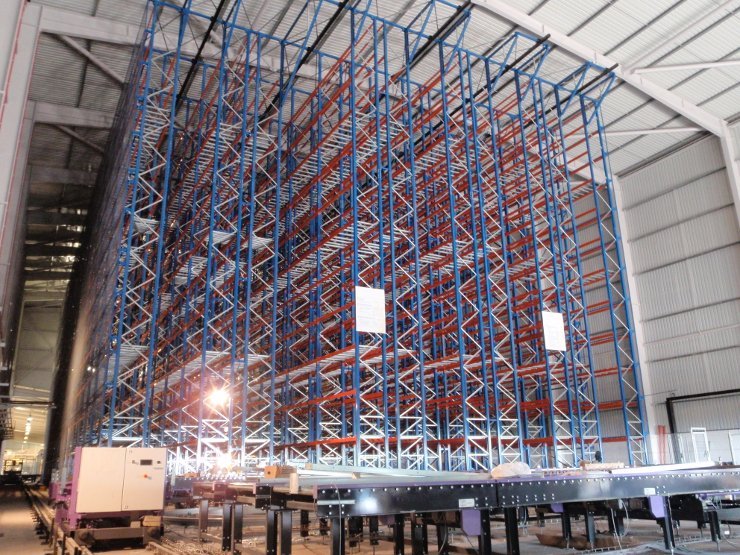
Yes, it is perfectly feasible. This is what in engineering we call In-House projects. In these cases, the automated industrial racking structures are calculated and manufactured to fit with millimetre precision to the clear height under the roof trusses, the grid of the existing columns and the mechanical strength of the current floor slab.
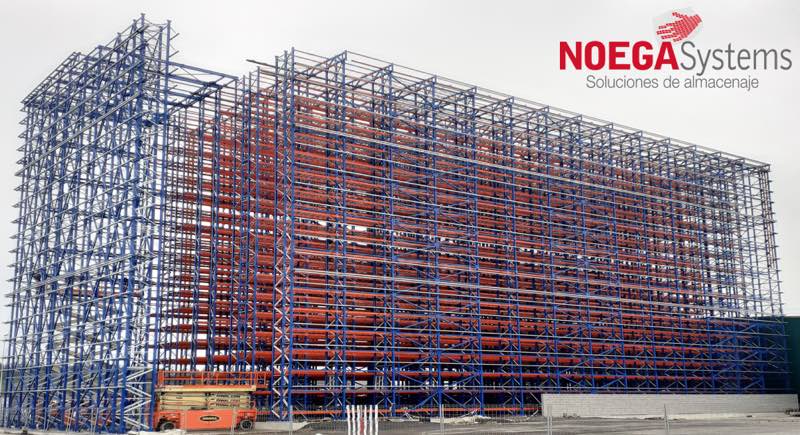
However, if maximum performance is sought without the physical limitations of an existing building, the ideal solution is the automated self-supporting warehouse, where the racking structure itself supports the roof and external façades of the logistics building.
What about structural safety in automated systems?
Unlike a manual warehouse, a robotic warehouse reduces direct mechanical impacts caused by human error when driving forklifts to practically zero. With no operators moving through the storage aisles, personal safety increases exponentially.
From an infrastructure perspective, racking for automated systems requires a significantly higher level of manufacturing and assembly tolerance than conventional racking. It must also be subject to strict preventive maintenance and scheduled technical inspection plans to ensure that alignment parameters, steel fatigue and bolted connections remain within nominal design ranges.
How long does it take to pay back an automated warehouse (ROI)?
Return on Investment (ROI) varies depending on the complexity of the project, the previous cost of land and the work shifts. As a general guideline in today’s European logistics, an automated system operating 2 or 3 shifts a day has a financial payback period of between 3 and 5 years. From that milestone onwards, the savings in fixed operating costs translate directly into higher net profit margins for the company.
Are you considering automating your logistics?
At Noega Systems we specialise in the engineering, calculation, design and manufacture of high-precision steel structures for automated warehouses and large self-supporting projects. We develop the ideal infrastructure to fit perfectly with the stacker cranes and software systems on the market.
Consult our engineers to resolve your technical questions. Call us on 984 190 927, contact us at infoweb@noegasystems.com or request detailed information at noegasystems.com/contacto.