
Storage systems | Noega Systems
Managing a large warehouse or logistics centre is a high-precision puzzle. It is not just about moving boxes, but about ensuring that every cubic metre is profitable and, above all, safe. In an environment where regulations change and technology is moving towards automation, many questions arise about how to keep operations running at the highest level.
In this guide of frequently asked questions about large warehouses, we cover everything from technical optimisation to the legal obligations that every logistics manager needs to know.
Common questions in managing large logistics facilities
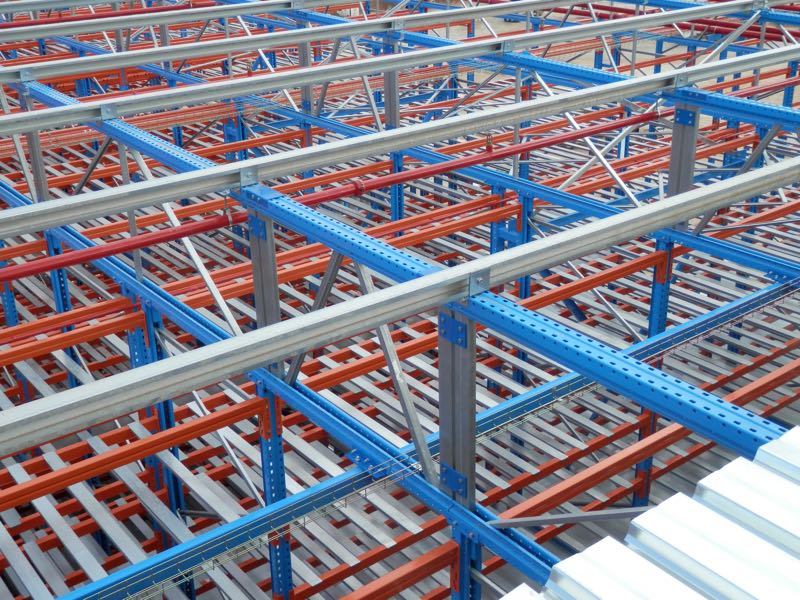
Unlike a small local warehouse, large warehouses face scalability challenges. The choice of storage system affects not only stock capacity, but also the number of forklifts needed, the width of the aisles and order preparation time (picking).
Comparison of storage systems for large volumes
To better understand which system suits each type of operation, we have prepared this technical table:
| System | Load Density | Pallet Access | Ideal for… |
|---|---|---|---|
| Conventional Pallet Racking | Medium | 100% Direct | A wide variety of SKUs |
| Drive-in (Compact) | Very High | Limited (LIFO) | Homogeneous low-turnover products |
| Pallet Shuttle | Maximum | Automatic per lane | High turnover and cold rooms |
| Live Pallet Racking | High | Excellent (FIFO) | Products with an expiry date |
Safety and Regulations, what you cannot overlook
In large warehouses, the risk of accidents multiplies due to the constant flow of heavy machinery. The UNE-EN 15635 standard is the bible of storage safety. It establishes that the user is responsible for keeping the equipment in perfect condition. This includes having up-to-date load notices and an incident log recording any impact or damage to the racking uprights.
How can I increase my warehouse capacity without extending the building?
There are three main routes, increasing the height of the racking to make use of vertical volume, installing compact storage systems that eliminate unnecessary aisles (such as mobile racking or Drive-in), or installing industrial mezzanines or raised platforms to create new working areas at height.
Is the Racking Technical Inspection (ITE) mandatory?
Yes, European and Spanish regulations establish that at least one inspection per year must be carried out by specialised technicians. This inspection ensures that the structures do not suffer dangerous deformations and that they meet the safety requirements to prevent collapses. At Noega Systems we are certified experts in these assessments.
View this post on Instagram
Which protection elements are essential in a large warehouse?
The most critical are upright and frame protectors to prevent damage from forklift impacts, anti-collapse mesh in walkways and pallet stops. These elements minimise the risk of serious structural damage and protect staff.
What is the difference between a manual and an automated warehouse?
In a manual warehouse, the operator goes to the goods or moves them with conventional forklifts. In an automated warehouse, stacker cranes or conveyors bring the goods to the operator. Automated systems make much better use of space in large warehouses, as they allow heights of more than 30 metres.
Transform your logistics with Noega Systems
Designing a large warehouse is not a task to be taken lightly. It requires precise structural calculations, in-depth knowledge of the operation and a long-term vision so that the system is scalable.
Do you need to optimise or inspect your large warehouse?
At Noega Systems we design, manufacture and install industrial racking and storage systems adapted to your operations. We also carry out the ITE® Racking Technical Inspection so that your facilities comply with regulations and operate safely. Call us on 984 190 927, email us at infoweb@noegasystems.com or visit us at noegasystems.com/contacto.


